

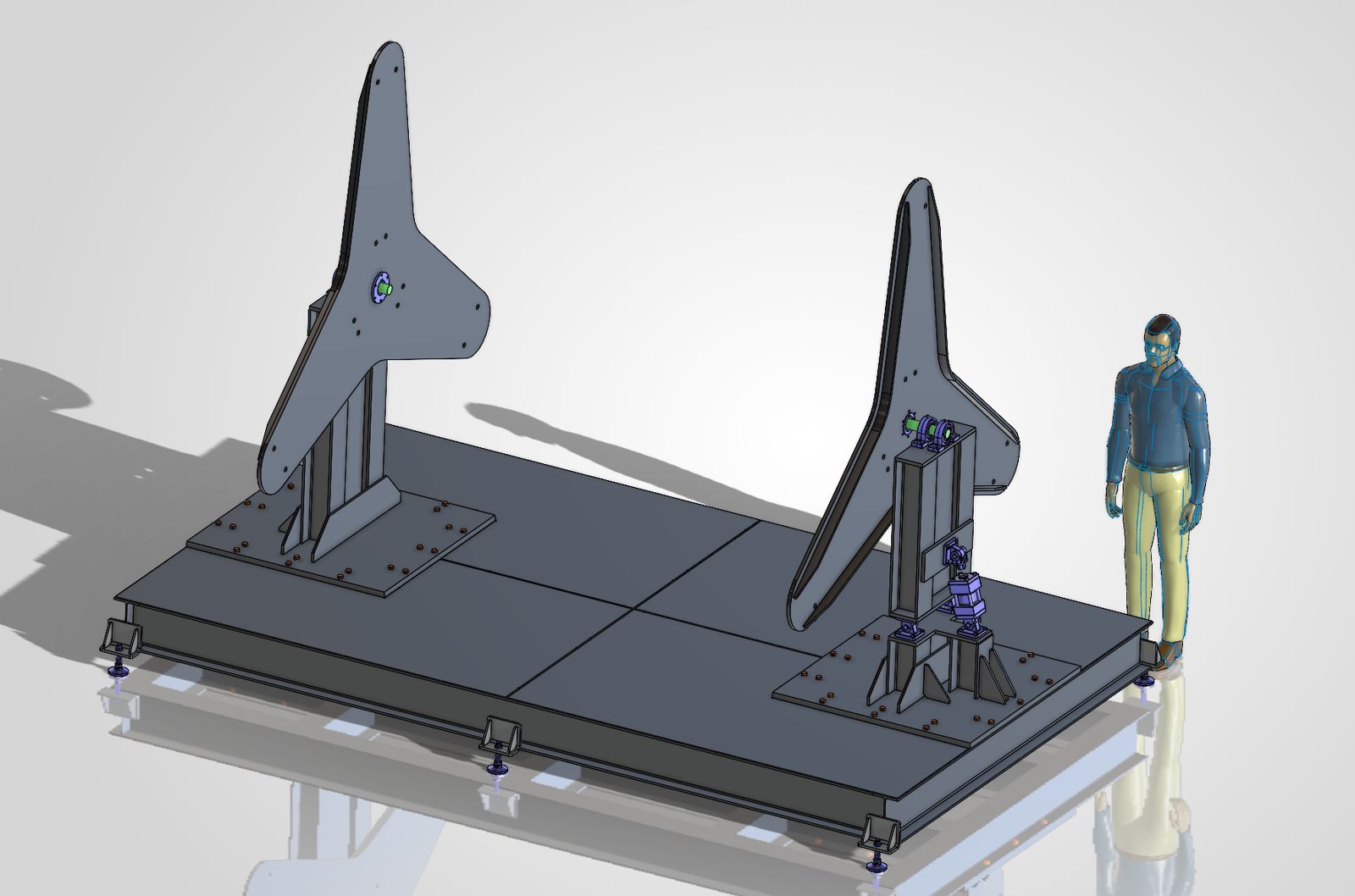
Designing welded assemblies
Design weldments that fit, stay straight and clean up well.
A weldment is only as good as the fit of its parts before the first weld. These rules make assemblies easier to fit up, keep them straight and make the welds stronger and cleaner.
Leave room for the torch
A welder needs to reach every joint with the torch at a sensible angle. Avoid welds in tight inside corners, deep channels or behind other parts, and check that the welder can see the joint.
Design parts that locate themselves
Tabs and slots, notches and laser-cut features that key parts together make an assembly fit the same way every time, with fewer fixtures and less measuring. We design them in when we model an assembly for you.
Weld only what you need
More weld means more heat, more distortion and more cost. Use the weld size and length the load needs, and use stitch welds where a continuous weld is not required. Put welds in balanced pairs on opposite sides so the heat pulls evenly.
Plan for distortion
Heat moves metal. Long, thin parts and large flat panels move the most. Tell us which surfaces must stay flat or square, and we will plan the weld sequence, fixturing and any machining after welding to hold them.
Food-grade stainless welds
For food, pharmaceutical and beverage equipment, we TIG weld 316 stainless steel with continuous welds, finish them smooth and passivate them, so there are no gaps or crevices where product can collect. Radius inside corners, like those on our 2,000 kg food transfer bin, clean out easily. Put the surface finish and any sanitary standard your equipment must meet on the drawing.
Call welds out clearly
Use standard weld symbols on your drawing to show the type, size and length of each weld. Not sure how to call one out? Mark where the parts join and what the joint must carry, and we will detail the welds. Need welds to a code or welder qualifications? Tell us which standard, such as CSA W59 or AWS D1.1, when you request a quote.
TIG or MIG
We TIG (GTAW) and MIG (GMAW) weld stainless steel, mild steel and aluminum. TIG gives the cleanest, most precise welds on thin and visible parts; MIG is faster on heavier sections. We choose the process for the part unless your drawing names one. See Metalworking & Fabrication.
Have a part in mind?
Send us your drawings, models or a sketch. We will come back with a plan and a quote. Or call 519-218-9525.
Send us your drawing